This woman is Marion Stokes, a former librarian, software programmer, and civil rights activist who realized that television history could easily be manipulated. Starting in 1979, during the Iran hostage crisis, she began recording 24-hour news channels to preserve an unedited, unaltered timeline.
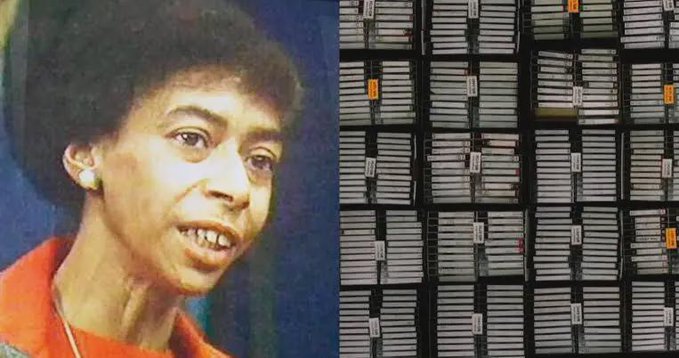
The Vision of an Archivist
- The Catalyst: Starting during the 1979 Iranian Hostage Crisis, Stokes realized that major networks were wiping and recycling old tapes to save money, permanently erasing unedited history.
- The Setup: She continuously ran up to eight VCRs at once in her Philadelphia home, requiring her family and staff to frantically swap out tapes while she was away.
- What Was Recorded: Beyond hard news, she captured commercials, pop culture, political debates, and breaking events like 9/11 and the Sandy Hook massacre. Her final recording was made on the day she died in December 2012.
Preserving the Truth
Stokes believed that without a comprehensive archive, media elites and shifting political climates could alter past narratives and manipulate public memory. By quietly accumulating an unedited visual timeline, she created an objective “time capsule” that now serves as an invaluable resource to hold power accountable.
The Ongoing Legacy
Her monumental collection was entrusted to her son, who donated it to the Internet Archive in San Francisco. Today, archivists continue the massive undertaking of digitizing her life’s work to make it permanently searchable and publicly accessible. The details of her unprecedented dedication are detailed in the 2019 documentary, Recorder: The Marion Stokes Project.
Read more about her inspiring quest to “fight history rewriting”: